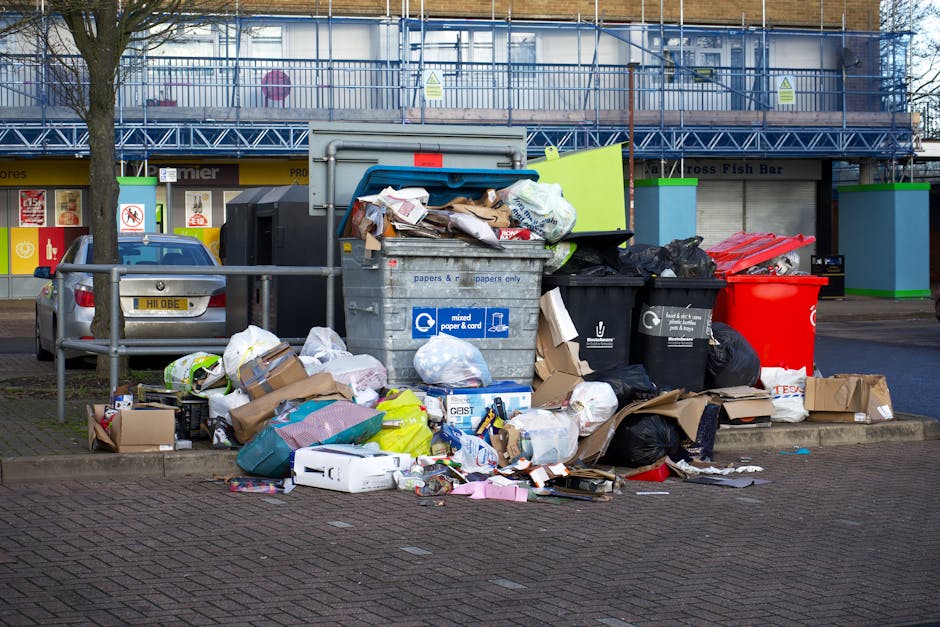
Bulky waste removal for TW18 4 postcode households Staines
If you live in the TW18 4 postcode area and you've got an old sofa in the hallway, a broken fridge in the kitchen, or a pile of awkward bits that simply will not fit in the car, bulky waste removal for TW18 4 postcode households Staines can feel like the easiest way to get your home back in shape. Truth be told, these jobs are rarely just about "getting rid of rubbish". They're usually about making space, reducing stress, and dealing with items that are too heavy, too awkward, or too time-consuming to handle on your own.
This guide explains how the process works, what you can expect, what to avoid, and how to choose the right approach for your home. It also covers practical decisions that matter in real life: access, safety, recycling, timing, and whether a one-off clearance or a broader home clearance or furniture disposal service might be the better fit. Let's make the whole thing feel a lot less faffy.
Quick expert summary: If the waste is bulky, difficult to lift, or needs more than a normal bin collection, the smartest route is usually to sort it, identify any restricted items, and book a collection that can remove, load, and dispose of it properly in one visit.
Why Bulky waste removal for TW18 4 postcode households Staines Matters
Bulky household waste has a habit of becoming invisible until it starts taking over a room. A mattress leant against the spare bedroom wall. A wardrobe door that won't close properly because the old chest of drawers is in the way. A fridge on the patio that has become a permanent feature. In TW18 4, where many homes are balancing limited storage, shared access, and busy schedules, the problem can build quickly.
This matters for three reasons. First, bulky items are physically awkward and can cause injury if you try to lift or drag them without the right help. Second, they often take up valuable living space, which affects how your home feels day to day. Third, not every item should go in a regular bin or be left out for standard collection. Some items need careful sorting, and some need specialist handling.
There's also the practical side. If you're preparing a property for sale, clearing out after a tenancy, replacing furniture, or simply reclaiming a room, bulky waste removal gives you a clean break rather than a slow, frustrating process. That can be especially useful when you need the space sorted quickly and don't want to spend a whole weekend wrestling a sofa through a narrow doorway. Been there? Most people have, one way or another.
For local households, a properly organised removal service can also support recycling and responsible disposal. When suitable items are separated correctly, more material can be reused or diverted away from landfill. A service with a clear approach to recycling and sustainability makes that easier for you without turning the whole thing into a project.
How Bulky waste removal for TW18 4 postcode households Staines Works
The basic process is straightforward, though the details matter. In most cases, you start by identifying what needs to go, then you request a quote or booking, then the collection team arrives, loads the items, and removes them for sorting and disposal. Simple on paper. In real life, the useful part is the planning around access, item type, and volume.
Here's what usually happens during a typical bulky waste collection:
- You list the items. This might include sofas, armchairs, wardrobes, beds, tables, white goods, broken appliances, and general oversize household clutter.
- You check for special items. Fridges, freezers, mattresses, and certain electricals can involve different handling considerations. If you have an appliance, look at fridge and appliance removal options.
- You get a price or estimate. Many services price bulky waste based on volume, item type, ease of access, and how much labour is needed. For more detail, see pricing and quotes.
- You confirm access. Staircases, parking, narrow hallways, lifted items, or no direct vehicle access can affect how smoothly the job runs.
- The team removes everything safely. Good operators will use two-person lifting where needed, protect walls and floors where practical, and avoid leaving mess behind.
- Waste is sorted after collection. Reusable items may be separated, recyclable material may be diverted, and the rest is handled according to its classification.
That last stage is the bit many people never see, but it matters. It's the difference between a quick dump and proper waste management. If you're comparing providers, ask how they handle sorting and disposal, not just the headline price.
For households with mixed rubbish, furniture, or general clutter, it can make sense to combine bulky removal with a broader waste removal service or a more specific house clearance when the job has grown arms and legs.
Key Benefits and Practical Advantages
The main benefit is obvious: the items go. But the real value goes deeper than that.
- Less physical strain: Heavy lifting is where most people get into trouble. A bulky item that looks manageable can be awkward, unstable, or just plain slippery.
- Faster room recovery: A cleared room changes how your home functions. You can use the space properly again instead of stepping around obstacles every day.
- Cleaner presentation: If you're decorating, renting out, or preparing for visitors, clearing bulky waste instantly improves the look and feel of the property.
- More sensible disposal: Professional removal is usually better than leaving items to weather outdoors or trying to break them apart without knowing what's inside.
- Better recycling outcomes: Good operators separate materials where possible, especially for furniture, appliances, and mixed loads.
- Less logistical hassle: No need to borrow a van, ring around friends, or make multiple trips to a disposal site.
There's also a quieter benefit: peace of mind. When clutter is removed properly, the home feels calmer. You notice it when you walk in from work and there isn't that slight mental weight of "I still need to sort that." That matters more than people admit.
If the items are mostly old chairs, wardrobes, tables, or similar furnishings, it may be worth looking at furniture clearance as a more targeted option. For larger clear-outs, home clearance can be the cleaner solution.
Who This Is For and When It Makes Sense
Bulky waste removal is not only for "big clear-outs". In fact, many calls come from ordinary households dealing with one annoying item that has overstayed its welcome. A tired sofa that nobody wants to haul. A heavy wardrobe from a previous tenancy. A broken treadmill that became a coat rack. It happens.
This service makes sense if you are:
- clearing out a spare room, loft, garage, or shed
- replacing old furniture and need the old pieces gone quickly
- preparing a home for sale or letting
- dealing with end-of-tenancy waste
- managing the aftermath of a renovation or DIY project
- sorting items after a life change, such as a move or bereavement
- trying to remove heavy items without risking injury
Sometimes the right service is very specific. For example, if your main problem is a couple of old mattresses, a specialist mattress and sofa disposal option may be the neatest fit. If you're dealing with stacked storage, boxes, and long-forgotten furniture in the roof space, a loft clearance may be more useful.
And yes, garages are often the final resting place of things that were meant to be temporary. You know the story. One chair becomes three chairs, then a broken lawn tool, then paint tins, then "stuff we'll deal with later." A garage clearance can be a very satisfying line in the sand.
Step-by-Step Guidance
If you want the process to go smoothly, treat it like a small project rather than a last-minute scramble. A little organisation saves time on the day.
- Walk through the property and identify bulky items. Separate furniture, appliances, garden items, builders' leftovers, and ordinary bagged waste if possible.
- Check what can be removed together. Mixed loads can be efficient, but some items need separate handling. For example, building debris is usually better treated as builders waste clearance rather than mixed household junk.
- Measure awkward items and note access issues. Tight stairwells, basement steps, low ceilings, or limited parking should be mentioned early.
- Ask what is excluded. Hazardous materials, certain chemicals, or unsafe items may need a different route. If in doubt, review hazardous waste disposal.
- Book the right time slot. Morning collections can help if you want the job finished before the day gets away from you. Late afternoon can work too, depending on access and household routines.
- Prepare the space. Clear pathways, move small valuables, and keep pets and children out of the work area.
- Be present if you can. A quick walkthrough at the start avoids misunderstandings. It also means the team can flag any item that needs special handling.
- Ask for confirmation of removal. A good service should leave you clear on what was taken and any follow-up steps, if needed.
That is the short version. In practice, the smoother jobs are the ones where the household has already done ten minutes of thinking before anyone arrives. Sounds obvious, but people forget. Then the sofa is halfway through the doorway and someone remembers the glass coffee table behind it. Bit of a moment.
Expert Tips for Better Results
These are the small things that usually make the biggest difference.
- Photograph the items before booking. A few clear pictures help with pricing and planning. Include any access points if they are tight.
- Separate reusable from unusable items. If something can be donated or reused, keep it away from waste that is clearly at end of life.
- Ask about appliance removal early. Fridges, freezers, washing machines, and other white goods can involve extra care because of size, weight, and components.
- Label what stays and what goes. It sounds basic, but during a busy clearance day, labels prevent mistakes.
- Think about stairs and turns. A mattress is easy in theory. At the bottom of a narrow staircase, not so easy.
- Choose the smallest effective service. A targeted collection can be more efficient than a full clearance if you only have a few large items.
One small but useful habit: stand in the room and imagine the item being carried out by two people, not one. If the route looks awkward to you, it probably is. Your instincts are usually right.
For households replacing large items, it can help to coordinate collection with delivery. That way the old sofa leaves before the new one arrives, rather than the other way round. A tiny bit of timing, and suddenly the day is less chaotic.
Common Mistakes to Avoid
Most bulky waste headaches come from simple mistakes rather than difficult jobs. Here are the ones worth avoiding.
- Leaving items too late. If you need a room clear by a specific date, do not leave the booking to the night before.
- Assuming everything can be removed the same way. Furniture, appliances, garden waste, and construction debris are not all treated identically.
- Underestimating access. It is easy to forget about awkward stairs, limited parking, or low branches outside. Then the truck arrives and everybody starts improvising.
- Mixing hazardous materials with ordinary waste. This is a safety issue, not just a paperwork issue.
- Trying to dismantle heavy items without the right tools. If a wardrobe is held together with mystery screws and hope, do not assume brute force is the answer.
- Not asking about recycling and disposal. If you care where the waste goes, ask before you book.
There is also a behavioural mistake that comes up a lot: people treat one bulky item as "just one thing" and then add another, and another, until the job has become a small clearance. That is not a problem, but it does change the scope. Say it early and avoid the awkwardness.
Tools, Resources and Recommendations
You do not need a toolkit full of specialist gear for most household bulky waste jobs, but a few practical aids can make the day easier.
| Tool or resource | Why it helps | Best for |
|---|---|---|
| Measuring tape | Checks whether large items can move through doors and stair turns | Wardrobes, beds, sofas |
| Phone camera | Helps you show item condition and access problems before booking | Quotes, mixed loads, appliance removal |
| Labels or tape | Makes it clear what stays and what goes | Shared homes, busy households, clear-outs |
| Gloves and sturdy shoes | Simple protection when moving lightweight items ahead of collection | Preparation and sorting |
| Service information pages | Clarify disposal options and what each service is designed for | Planning the right job |
For many households, the most useful resource is not a physical tool at all. It is knowing the difference between a furniture-only job, a general household clearance, and a mixed waste removal service. If you are not sure, start with the item type and work backwards from there.
You can also use service pages such as flat clearance, garage clearance, or office clearance if your bulky waste sits in a more specific space. That kind of matching usually saves time and avoids paying for more than you need.
Law, Compliance and Best Practice
For householders, the practical rule is simple: waste should be passed to a legitimate carrier and handled responsibly. You do not need to become a waste-law expert, but it helps to understand the basics.
In the UK, the key expectations are usually about safe handling, proper disposal, and avoiding fly-tipping. If a job involves items that could be hazardous, such as chemicals or certain electrical components, they should not just be mixed into a general pile and hoped for the best. That approach creates risk for everyone, including the household and the people loading it.
Best practice usually means:
- sorting out obvious hazardous items before collection
- being honest about what needs removing
- using a service that can explain how waste is handled
- checking terms, payment, and what happens if the load changes
- keeping clear access for safe lifting and loading
If you value safety and accountability, look for reassurance around insurance and safety and the provider's health and safety policy. Those pages matter because they show the business is thinking about more than just speed.
One more plain-English point: a good service should be comfortable saying "this item needs separate handling" or "we can't take that as part of this load". That is not a problem. It is a sign they know what they are doing.
Options, Methods, or Comparison Table
There is more than one way to deal with bulky items. The best choice depends on volume, item type, urgency, and how much effort you want to spend yourself. Here's a simple comparison.
| Method | Best for | Pros | Trade-offs |
|---|---|---|---|
| Bulky waste removal service | Heavy, awkward, one-off items or mixed bulky loads | Fast, convenient, labour included, minimal hassle | Usually priced by volume or load size |
| Furniture-only disposal | Sofas, beds, wardrobes, tables, chairs | Focused, efficient for household furniture | Less suitable for mixed waste or non-furniture items |
| Full house or home clearance | Broad domestic clear-outs, multiple rooms, larger projects | Comprehensive, good for bigger transitions | May be more than you need for just a few items |
| DIY disposal | Very small loads, easy access, time to spare | Can be flexible if you already have transport | Heavy lifting, multiple trips, time-consuming, safety risks |
For many TW18 4 households, a targeted collection hits the sweet spot. It is not too broad, not too narrow, just practical. That's the bit people appreciate most when they're already juggling work, family, and a house that needs attention.
Case Study or Real-World Example
Here is a realistic example. A household in TW18 4 had a spare room that slowly became storage for an old sofa, a broken chest of drawers, two mattresses, and several boxy bits from previous furniture changes. Nothing dramatic, just the kind of clutter that builds quietly over months. The room had started to feel smaller every time they opened the door.
They first considered doing it themselves, but after checking the stairwell, the tight corner at the bottom of the stairs, and the fact that the sofa barely cleared the landing, they decided it was not worth the risk. Sensible call, really. One awkward lift can turn into a scratched wall, a strained back, or both.
Before booking, they separated a few items that were still usable and checked the rest for condition. They sent over clear photos, noted the parking situation, and asked for a collection that could deal with mixed bulky items in one visit. The result was simple: the room was cleared, the household kept control over what stayed and what went, and the space became usable again within the day.
What did they gain? Less clutter, yes. But also a room that could finally be turned into a proper office. Sometimes that is what the clearance is really for: a fresh start that was waiting in the background all along.
Practical Checklist
Use this checklist before your bulky waste collection. It keeps things calm and avoids the usual last-minute panic.
- List every item you want removed
- Separate furniture, appliances, and general waste
- Check whether anything may need special handling
- Measure the biggest items and note tight access points
- Take photos if the items are awkward or mixed
- Clear pathways to doors, hallways, and staircases
- Move pets, children, and valuables away from the work area
- Confirm the collection time and any parking needs
- Ask about recycling and disposal methods
- Keep your booking details and terms handy
If the job has started to spread beyond a few items, it may be worth looking at a wider clearance option. A house clearance or even a targeted garage clearance can sometimes be the more efficient route. Better to choose the right shape of service than to force the wrong one.
Conclusion
Bulky waste removal for TW18 4 postcode households Staines is about more than getting rid of old items. It is about removing the friction that bulky furniture, appliances, and awkward clutter create in everyday life. When the job is planned properly, the process is straightforward, safe, and surprisingly relieving. You clear the space, reduce the stress, and give the home a bit of breathing room again.
The best results usually come from three simple habits: know what needs to go, be honest about access and item type, and choose the right level of service for the job. If you do that, the rest tends to fall into place. Not perfectly, maybe, but well enough to feel like a proper win.
Get a free quote today and see how much you can save.
And if you're standing there looking at one more heavy item you've been avoiding for weeks, fair enough. Start with that one. The rest gets easier once the first piece is gone.
Frequently Asked Questions
What counts as bulky waste in a household?
Bulky waste usually means large or heavy items that are hard to move and cannot be handled as ordinary bagged rubbish. Sofas, beds, wardrobes, mattresses, appliances, tables, and similar oversize household items are common examples.
Can I book bulky waste removal for just one item?
Yes, in many cases you can. A single sofa, fridge, wardrobe, or mattress is often enough to justify a collection, especially if it is too heavy or awkward to remove yourself.
Is bulky waste removal better than hiring a van myself?
It depends on the item, the access, and how much lifting is involved. If you have a light load and easy transport, DIY can work. If the item is heavy, awkward, or needs two-person lifting, a removal service is usually safer and less stressful.
What should I do before the collection team arrives?
Clear pathways, identify what needs to go, keep valuables aside, and make sure the team can reach the items easily. If access is tight, let them know in advance so they can plan properly.
Can bulky waste include old furniture and appliances together?
Often yes, though some items may need different handling. Furniture and appliances can be collected together if the service allows mixed loads and the items are suitable for the same job.
What happens to bulky items after they are collected?
They are usually sorted after collection. Reusable items may be separated, recyclable materials may be diverted, and the remaining waste is disposed of in line with the provider's process.
Are fridges and freezers treated differently?
They can be. Fridges and freezers may require specialist handling because of their size and components, so it is sensible to mention them early and check the service in advance.
Is it safe to leave bulky items outside until collection?
Only if the items are in a secure, appropriate place and the arrangement has been agreed. Leaving waste outside for too long can create safety, weather, and security problems, so it is better to keep items ready and move them out close to the appointment time.
How do I know if I need a full house clearance instead?
If you are dealing with several rooms, a large number of items, or a property that needs a major reset, a full house clearance or home clearance may be more efficient than a simple bulky item collection.
Can bulky waste removal help after decorating or DIY work?
Yes, if the load includes old fixtures, broken fittings, or leftover materials. For heavier renovation debris, builders waste clearance may be the better match.
What if I am not sure whether an item is accepted?
Take a photo and describe it clearly before booking. If it is hazardous, unusually heavy, or likely to need special handling, mention that upfront. A quick check is much better than guessing on the day.
How can I keep the process as cheap as possible?
Sort items in advance, give accurate details, combine related items in one visit where practical, and avoid surprise additions on the day. Clear information often leads to a cleaner quote and a smoother job.
Where can I learn more about the company and its policies?
You can review pages such as about us, insurance and safety, and recycling and sustainability to understand how the service is run and what standards it follows.