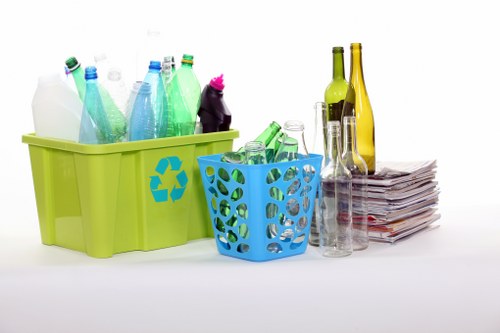
Commercial Waste Staines: Recycling and Sustainability
Commercial Waste Staines provides a clear, practical framework for an eco-friendly waste disposal area and a thriving sustainable rubbish area across Staines and the surrounding Spelthorne borough. Our aim is to help businesses reduce landfill, increase recycling rates and support circular economy practices. We focus on operational transparency, measurable targets and local partnerships to make sustainable commercial waste handling the norm, not the exception.
Why this matters: commercial waste in Staines represents a significant opportunity to cut emissions and recover reusable resources. By prioritising source separation, timed collections and material-specific handling, Staines commercial waste services improve diversion rates and create value streams from materials that were previously classed as refuse.
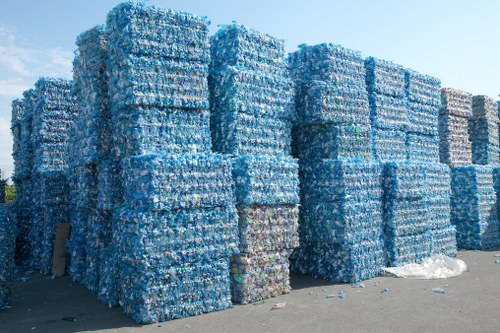 Our current recycling percentage target is ambitious yet achievable: we aim for a 60% recycling rate for commercial waste by 2028, moving toward 70% by 2035. To hit this, we coordinate with local transfer stations, consolidate loads for efficient onward transport and collaborate with local authorities and borough transfer hubs to reduce double-handling. That local network is essential to create a genuine eco-friendly waste disposal area for the town.
Sustainable operations and low-carbon fleet
We deploy a combination of route optimisation, load consolidation and low-carbon vans to reduce emissions from collections. Our low-emission vehicles — including electric and hybrid light vans — operate across Staines commercial rubbish routes, lowering CO2 output and improving air quality. We also use telematics and driver training to keep fuel consumption minimal and service reliability high.
Local transfer stations and consolidation points play a critical role: they allow small, frequent pickups from local shops and offices to be aggregated into full trailer loads for efficient transfer to material recovery facilities. This reduces traffic, fuel use and the cost per tonne of recycled material, improving the sustainability equation for businesses of all sizes.
 We maintain strong partnerships with community charities and reuse organisations to divert usable goods from the waste stream. Donations of furniture, textiles and commercial surplus food are coordinated with local non-profits and redistribution networks; these relationships ensure items get a second life and prevent unnecessary processing at recovery sites.
Types of recycling activity relevant to the area include:
- Paper & cardboard baling and reuse
- Glass segregation and specialist glass recycling
- Food waste collection for anaerobic digestion
- Textiles and furniture re-use through local charities
- WEEE collection and secure data-bearing device handling
These activities reflect how boroughs approach waste separation: dry recycling streams separated at source, organics collected separately where infrastructure permits, and dedicated routes for bulky or hazardous commercial items. The local authority and commercial operators coordinate calendars and communications so businesses know how to separate materials effectively.
Our sustainable rubbish area model emphasises material value recovery over disposal. By investing in separation, pre-treatment and local transfer infrastructure, we reduce the volume of residual waste that goes to landfill and increase the proportion of material reused or recycled.
 Partnerships with charities are a cornerstone of our approach: we work with local food banks, furniture re-use charities and employment-focused social enterprises to channel recoverable goods into the community. This not only reduces waste volumes but delivers social value — supporting local people and creating circular economy jobs.
Operational transparency is essential. We publish regular reports on tonnes diverted, recycling rates and carbon savings. These metrics help businesses understand the impact of their waste choices and encourage continuous improvement. Our commercial waste in Staines reporting aligns with local authority expectations and national sustainability frameworks so progress is measurable and verifiable.
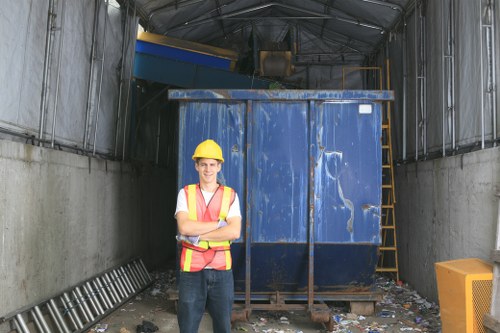 Looking ahead, technology and collaboration will drive further gains. We are exploring more electric vans, smarter scheduling, and additional transfer station capacity to better serve dense commercial districts. By creating an integrated, low-carbon collection network and sustainable rubbish area infrastructure, Commercial Waste Services in Staines can deliver both environmental benefits and operational savings for local businesses.
Training and behaviour change are part of the plan: we support staff and clients with simple separation rules, clear on-site signage and regular reviews to reduce contamination. A cleaner stream means higher recycling yields and lower processing costs, reinforcing the case for source separation across the borough.
Commitment to continuous improvement
Our approach to commercial rubbish in Staines is pragmatic and evolving. We monitor policy shifts from Spelthorne Borough Council and regional waste partnerships to stay aligned with broader waste separation initiatives. By combining practical collection solutions, charity partnerships, and a greener fleet, we aim to be the benchmark for an eco-friendly waste disposal area at the local level.
In short, Commercial Waste Staines is more than a service — it is a local movement toward a sustainable rubbish area and low-carbon future. Through clear targets, collaborative transfer station use, charity partnerships and cleaner collection fleets, we turn commercial waste into resources and deliver measurable sustainability outcomes for Staines businesses.
