Health and Safety Policy — Commercial Waste Staines
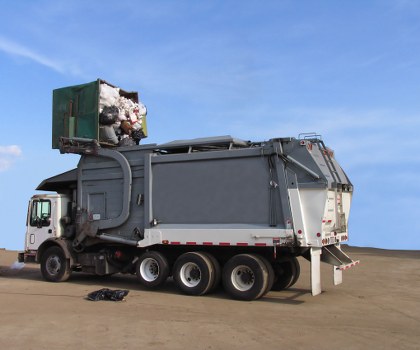 This Health and Safety Policy sets out the commitments and procedures for safe handling, transport and disposal of commercial waste across our rubbish company service area. It is intended to ensure that all staff, contractors and site visitors understand their roles and responsibilities when dealing with general commercial waste, recyclable materials and controlled waste streams. The policy applies to all operations related to commercial waste collection, transfer and storage and is maintained as part of our ongoing safety management system.
Our objectives are to prevent incidents, minimise health risks and reduce environmental harm through consistent practice and clear controls. Key principles include risk assessment, safe systems of work, training and competence, and continuous monitoring. Everyone engaged in waste handling must adhere to safe manual handling techniques, use correct lifting aids and wear appropriate personal protective equipment (PPE) to avoid injury from sharps, hazardous residues or heavy loads.
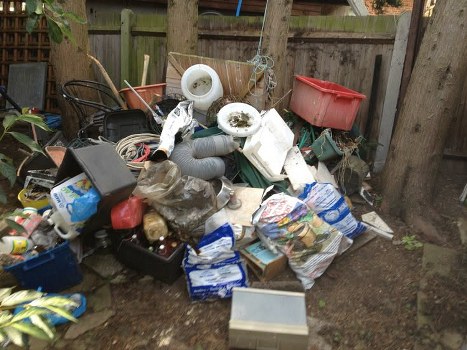 All activities are supported by documented procedures for vehicle loading and unloading, site segregation of waste types and secure containment. Drivers and operatives are trained to identify potential hazards such as leaking containers, chemical residues and unsafe stacking. Regular vehicle and equipment inspections are mandatory, and any defects that could compromise safety or pollution controls must be reported immediately. The goal is to remove ambiguity and provide practical, repeatable actions for routine and non-routine tasks within the rubbish collection Staines service zone.
Risk assessments are carried out for specific tasks including bin lifts, compacting operations and bulk skip handling. Assessments consider physical risks, biological hazards, ergonomic stresses and traffic management. Control measures are implemented by hierarchy: elimination, substitution, engineering controls, administrative controls and PPE. Where elimination is not possible, engineering and administrative measures are documented and reviewed to ensure they remain effective and proportionate for commercial waste operations.
Training and competence form a cornerstone of our approach. Induction and refresher programmes cover hazard recognition, spill response, first aid, and emergency evacuation procedures. Job-specific training addresses the safe use of balers, compactors and lifting equipment. Supervisors use toolbox talks and spot checks to reinforce behaviours and ensure adherence to the commercial rubbish services standards expected across the service area.
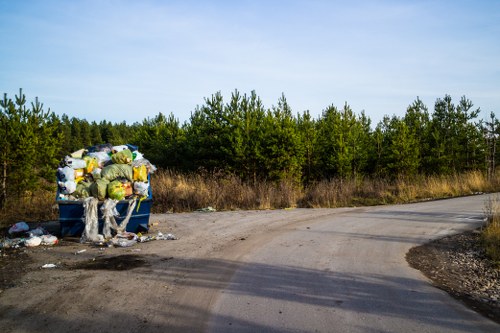 Emergency preparedness covers spill containment, fire risks and exposure to hazardous substances. Procedures specify containment materials, emergency contact chains and isolation of affected areas. Incident reporting and investigation processes ensure that root causes are identified and that corrective actions are implemented promptly. Accident records are maintained to identify trends and to support continuous improvement of safety performance in commercial waste management operations.
Traffic management and on-site segregation are essential to protect workers and the public. Vehicle routes, pedestrian walkways and loading/unloading zones are clearly marked and controlled. Speed limits and reversing avoidance systems reduce vehicle-related risk, and banksmen or traffic marshals supervise complex maneuvers. Contractors and third parties operating within the rubbish company service area must comply with site-specific rules and wear high-visibility clothing at all times.
Waste categorisation and safe segregation prevent cross-contamination and lower exposure to hazardous materials. A simple checklist is maintained at transfer and collection points to ensure proper labelling and containment. The following controls are emphasised:
- Secure, labelled containers for different waste streams
- Immediate isolation of suspected hazardous loads
- Routine checks for leaking or damaged packages

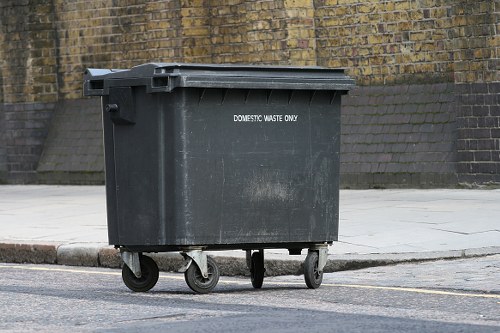 Monitoring and review mechanisms include routine audits, health surveillance where appropriate and performance metrics such as incident frequency, near-miss reporting rates and corrective action completion. Management reviews examine these indicators to allocate resources, refine controls and update training. Continuous improvement ensures the health and safety policy adapts to operational changes and emerging risks within the commercial waste and rubbish collection landscape.
Responsibilities
Management must provide leadership, resources and oversight. Supervisors are responsible for enforcing procedures and supporting staff. Employees and contractors must follow instructions, report hazards and participate in training. All personnel should exercise due care and act promptly to remove hazards and protect themselves and others.
Implementation and communication
Policy communication uses briefings, written procedures and site signage to ensure clarity. Records of training, inspections and incidents are kept to demonstrate compliance and support the ongoing effectiveness of the health and safety programme for commercial waste operations in the rubbish company service area.
Review: This policy is reviewed annually or following significant incidents, operational changes or regulatory updates. The review process ensures the policy remains relevant, practical and aligned with good practice for commercial waste handling and disposal.
Signed on behalf of the organisation — the policy demonstrates a commitment to manage health and safety risks responsibly across all commercial waste activities. Implementation is mandatory and monitored to protect people, assets and the environment.
